Fields to extract
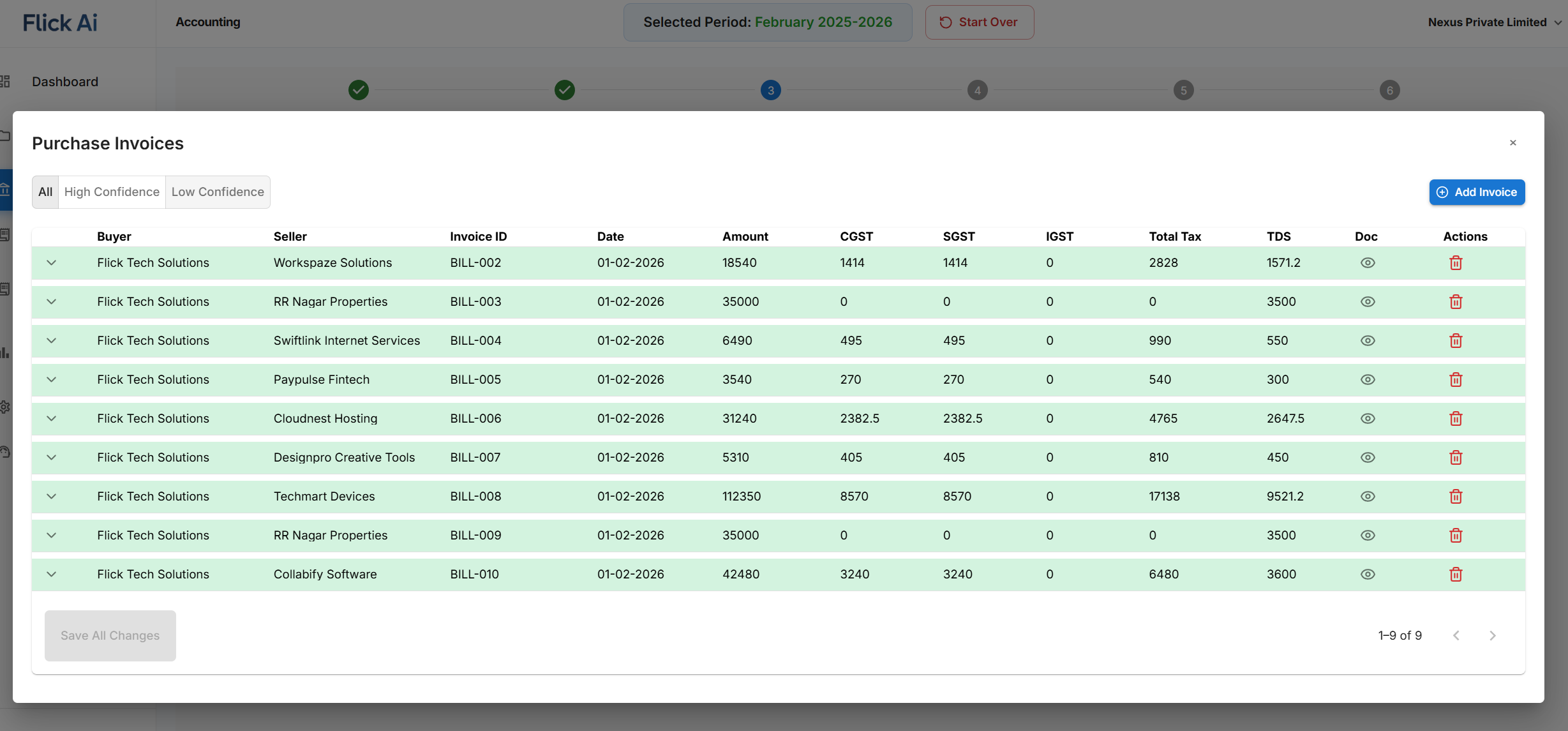
Important fields include party information, invoice date, invoice number, taxable value, tax amounts, total amount, and document context.
- Supplier or customer
- Invoice number and date
- GST-related amounts
- Total and line clues
Invoice Guide
Indian invoice parsing needs to capture more than OCR text. The data must be useful for ledgers, GST review, reconciliation, and reports.
Published 4 Mar 2026 · Last updated 25 May 2026
Important fields include party information, invoice date, invoice number, taxable value, tax amounts, total amount, and document context.
Once the invoice is parsed, accounting software can use the data for matching, ledger suggestions, and reporting.
Best Fit
Flick AI is not trying to be a heavy inventory ERP. It is built for invoice-led businesses and the professionals who serve them: teams where monthly accounting is mostly documents, bank transactions, reconciliations, ledgers, and financial reports.
Flick AI is best suited for service businesses, consultants, agencies, SaaS companies, professional firms, and other teams that raise and receive invoices every month but do not need heavy inventory accounting.
For CAs and finance consultants serving non-inventory-led customers, Flick AI gives a repeatable monthly workflow for document collection, invoice parsing, reconciliation, ledger review, and report preparation.
The goal is simple: founders should focus on business through the month, then spend roughly 1-2 focused hours reviewing bookkeeping and cleaning financial sheets instead of chasing accounting tasks every week.
Product Workflow
This resource focuses on ai invoice parsing for indian invoices. For the complete step-by-step workflow, see the main Flick AI guide covering upload, parsing, reconciliation, ledger review, and reports.
Read the full workflowProduct Proof
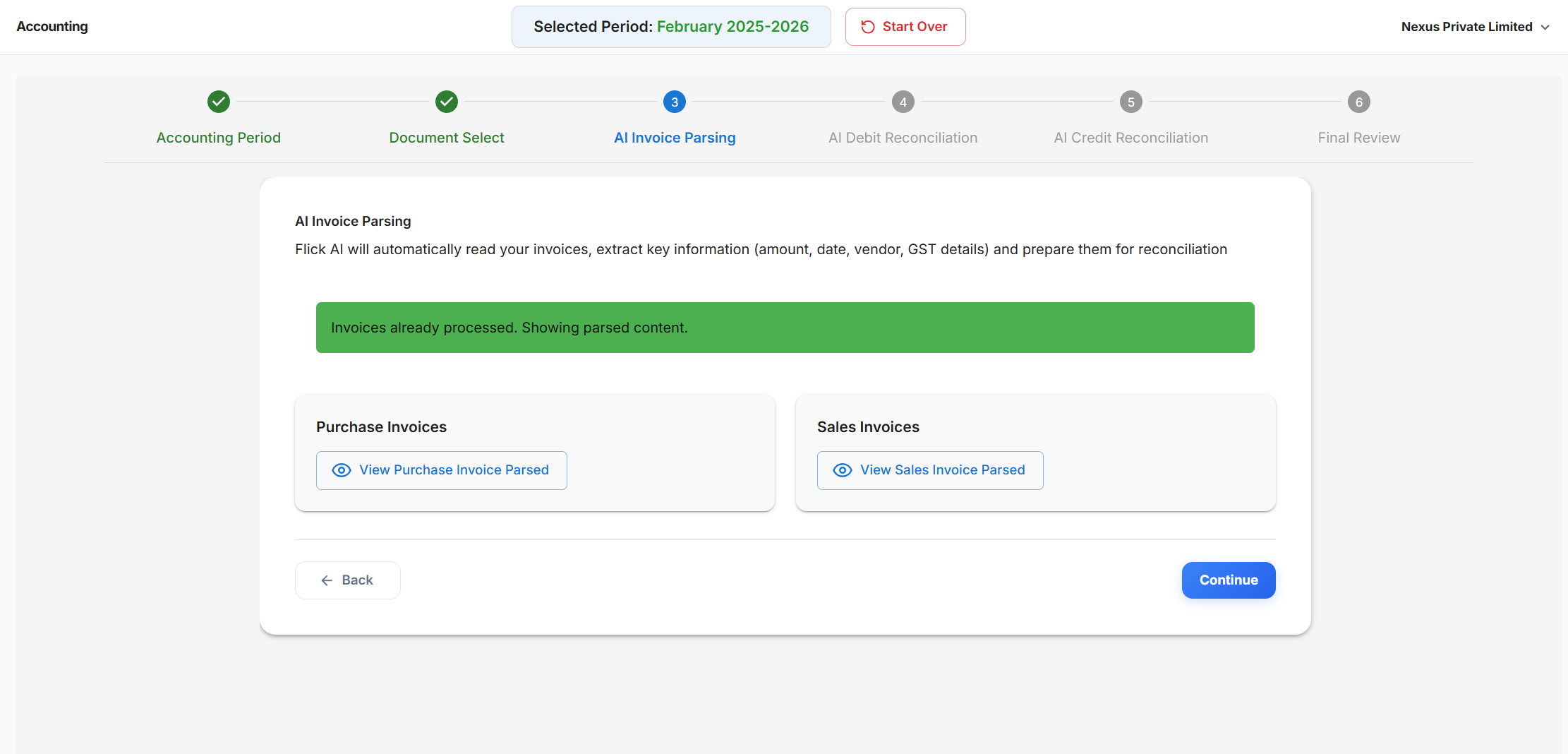
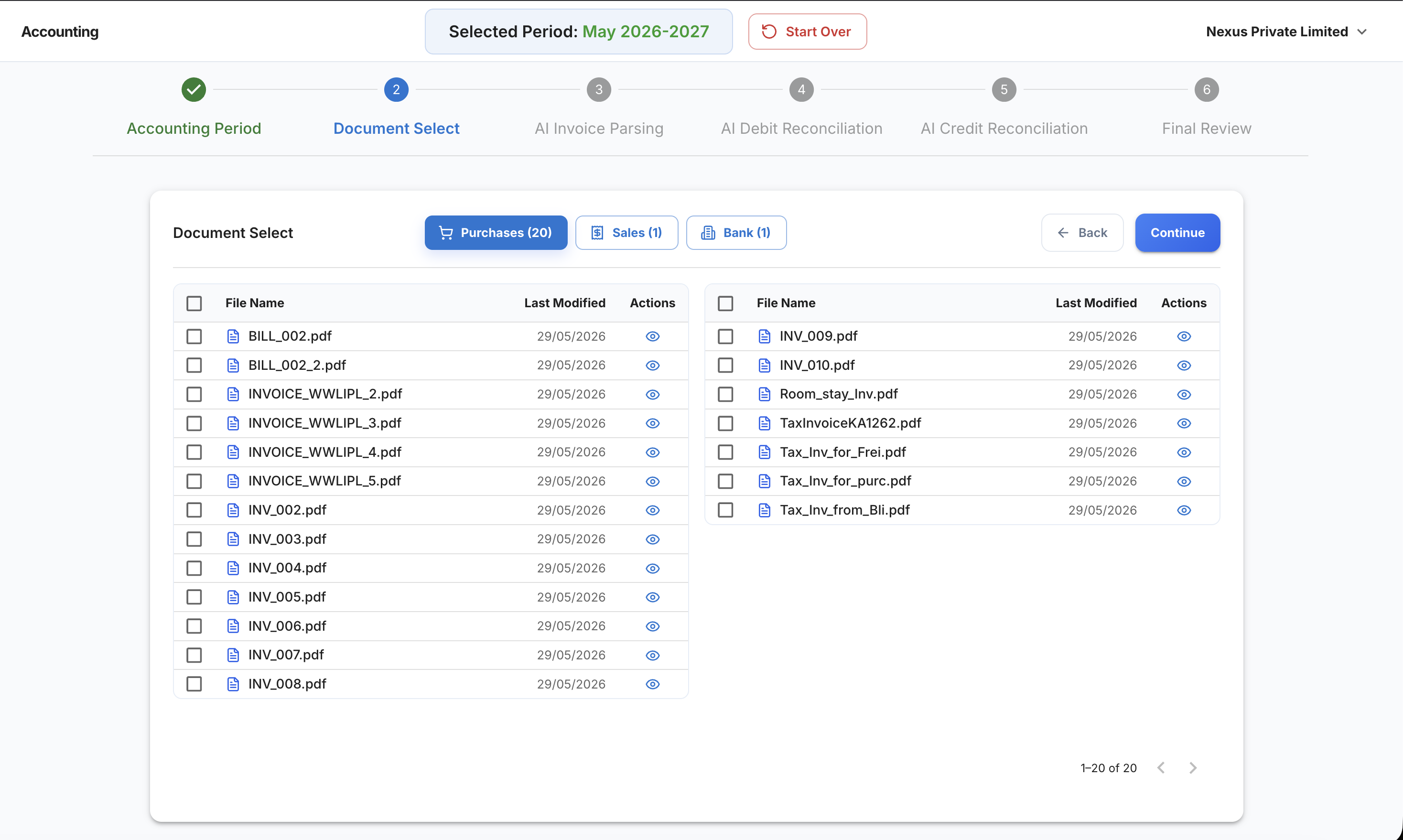
The invoice parsing screens show the key SEO and product point: extracted fields are visible and editable, so Indian invoice parsing stays reviewable.
Key Capabilities
Convert invoices into structured data.
Use extracted data in accounting workflows.
Prepare reports from reviewed records.
| Field | Example use | Review need |
|---|---|---|
| Party | Receivable or payable tracking | Check name and GSTIN context |
| Date | Monthly close | Check accounting period |
| Amount | Payment matching | Check total and tax |
| Tax details | GST review | Check correctness |
FAQ
OCR extracts text, but accounting workflows need structured fields that can be reviewed and used in reconciliation and reports.
Yes. Flick AI is built to parse invoices, bills, and receipts used by Indian businesses.
Flick AI Basic includes 100 invoice parses per month and Pro includes 500 invoice parses per month.
Try Flick AI
Start with a 14-day free trial or book a demo to see how Flick AI handles invoice parsing, reconciliation, GST/TDS support, and reports for Indian businesses.